[Onyado Nono Kumamoto] A surprise return to auto-löyly!? Sea bream with sesame-dressing rice bowl and the series’ first hand-massage room — full review of Higo-no-Yu
熊本県-Kumamoto
Hi everyone, Greippi here. This is the 14th installment in my mission to conquer every “Onyado Nono” — the Japanese-style premium brand from Dormy Inn. Today’s destination: the heart of the former Higo Province, Kumamoto — “Natural Hot Spring Higo-no-Yu Onyado Nono Kumamoto.” After Sakaiminato, Toyama, Namba, Nara, Asakusa (main), Kyoto Shichijo, Kanazawa, Osaka Yodoyabashi, Sendai, Matsue, Matsumoto, Beppu, and Asakusa Bettei, this makes 14. Only 1 of the 15 nationwide Onyado Nono properties remains — the very next stop completes the full pilgrimage. Kumamoto turns out to be a newcomer, having opened only about a year ago. The self-löyly lineage that had been running since Matsue made a surprise return to auto-löyly, and the breakfast featured a distinctive rice bowl built around sea bream with sesame dressing — a property full of discoveries. I stayed there — here’s the honest report.
Property: Natural Hot Spring Higo-no-Yu Onyado Nono Kumamoto
Stay date: August 30–31, 2026
Access: 5-min walk from Sakura-machi Bus Terminal.
Rate: ~¥11,700 (single occupancy / 1 night).
Surroundings:Countless restaurants nearby. Convenience stores: a 7-Eleven to the right and a FamilyMart to the left as you exit the hotel — couldn’t ask for more.
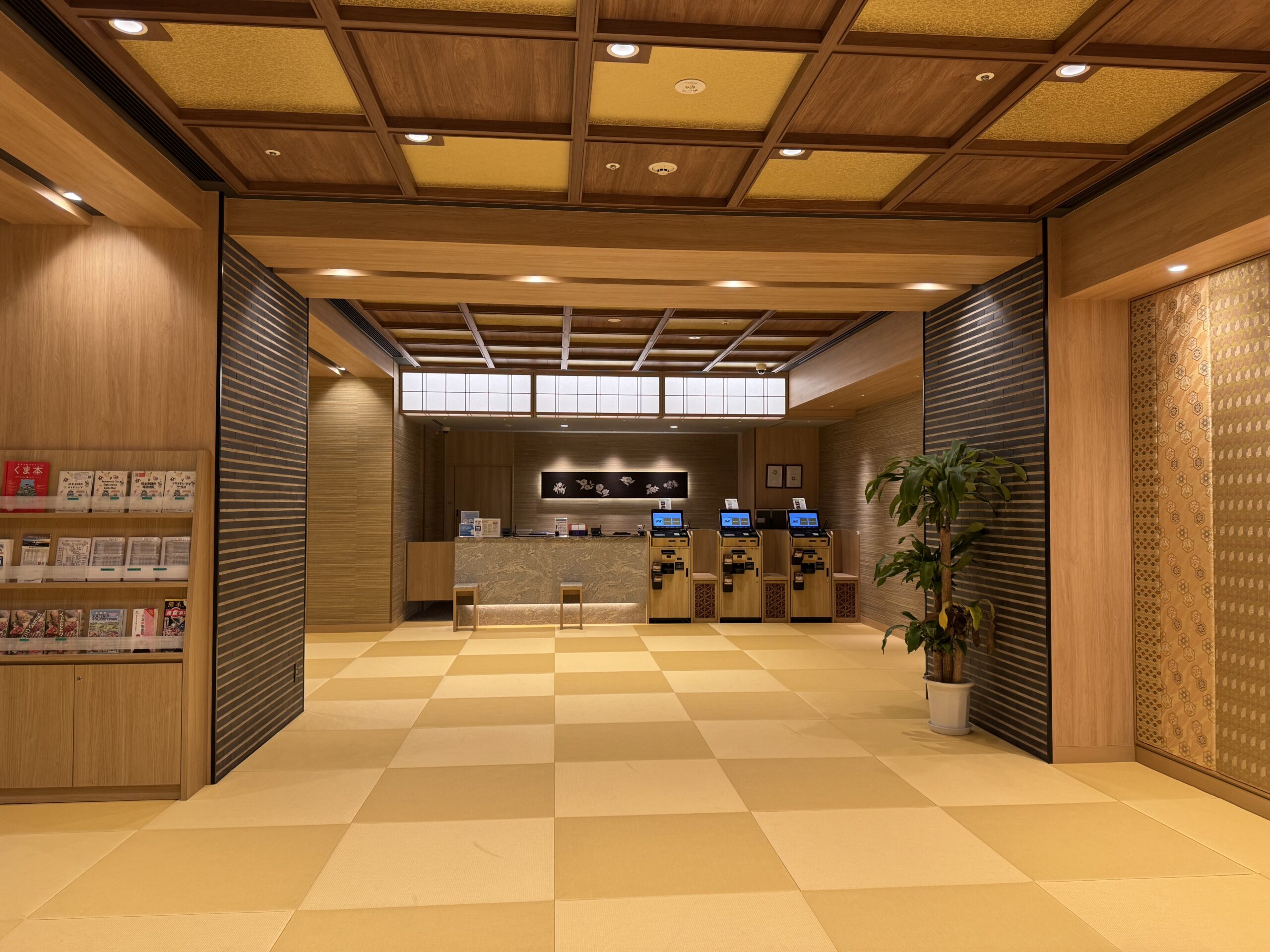
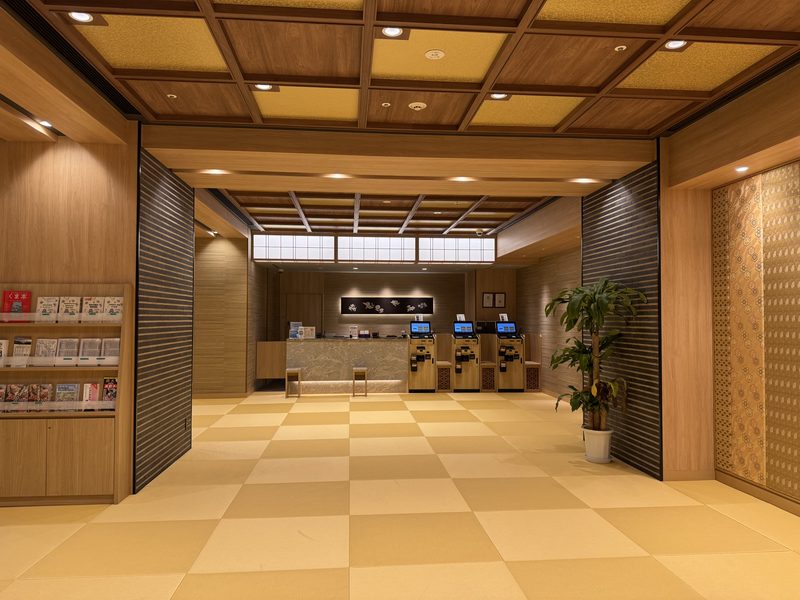
The rate came in at ¥11,700, the series’ second-lowest after Nara. Located just off the main entertainment district, but with solid transit access — 5 minutes on foot from Sakura-machi Bus Terminal. Having opened only about a year ago, the interior is impeccably clean throughout. Guest numbers were moderate, with mostly Japanese guests and a smattering of Taiwanese and Korean visitors — a calm, relaxed crowd.
Tatami first impression: Clean. Being newly opened, wear and stains were essentially non-existent.
Room type: Double room, standard size.
Bed comfort: Reliable Serta quality as always.
Samue (traditional Japanese-style loungewear): The familiar half-yukata style.
Welcome service:Moist pineapple financier. The lineage continuing from Sendai → Matsue → Matsumoto persists here too.
Trivia find:The TV was a smart TV — a nice equipment upgrade that comes with being a newer property.
The room itself is essentially identical to other Nono properties — reliable and familiar. But being a newer build, you can feel the small equipment details quietly getting upgraded.
Bath & Sauna (Natural Hot Spring Higo-no-Yu)
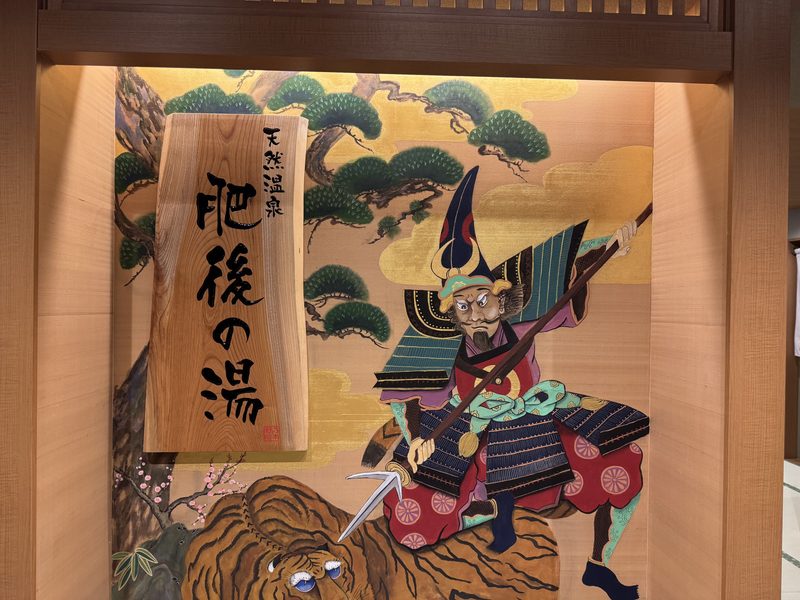
Kumamoto Nono’s bath house is Natural Hot Spring Higo-no-Yu, located on the 11th floor.
Bath name: Natural Hot Spring Higo-no-Yu
Water: Clear and colorless. No view, but the air moves through nicely.
Sauna temp: 85°C (185°F). Not too hot, not too mild — a well-calibrated setting. Auto-löyly and auto air circulation.
Sauna room size: 3 tiers, capacity ~12. Dim ambiance lit only by indirect lighting.
Presentation:Lighting effects activate during the auto-löyly cycle (once every 20 minutes) — a stylish touch. When the auto-löyly (AL) fires, 3 punkah-louvre fans provide additional airflow.
Aroma:Clean Sky continues. Firmly established since its Matsue debut.
Cold bath: 15°C (59°F), positioned directly in front of the sauna room, with a walk-through layout (pass through the cold bath en route to the outdoor rest area).
TV: Variety in the evening, NHK News in the morning.
Tattoo policy: Generally not allowed.
A surprise return to auto-löyly — what’s the intent?
The biggest talking point this round: the self-löyly lineage that had continued since Matsue made a surprise return to auto-löyly here in Kumamoto. I found myself wondering what the reasoning might be — but personally, I suspect auto-löyly may actually suit Japanese guests better, so this could well be the right call for this property. The lighting effect that activates with each 20-minute auto-löyly cycle is a stylish touch, and combined with the 3 punkah-louvre fans, the heat wave lands with real presence. The moderate 85°C / 185°F setting struck a genuinely comfortable balance — not too hot, not too mild. The aroma continues with Clean Sky, though it seemed to be released more strongly than usual — a small but notable difference.
The slender Metos sauna stove, tilted since… when?
I noticed the slender Metos-brand sauna stove at the center of the room was slightly tilted. It made me pause and wonder whether this was related to the recent earthquake. Given Kumamoto’s history, even small traces like this carry a certain weight.
Walk-through cold bath and the “totonoi-booster pillow”
The cold bath sits directly in front of the sauna room — excellent positioning — with two entry/exit points forming a walk-through layout that flows naturally into the outdoor rest area. Water temp 15°C / 59°F, with a slight chlorine scent but a soft, gentle feel on the skin — a solid, no-frills execution. The outdoor rest space is fully walled in with no view, but open to the sky above for a reasonable sense of openness. The breeze is lukewarm but does come through decently. And the new gadget this round: the “totonoi-booster pillow” (water-cooled), following Asakusa Bettei’s “totonoi-booster lever” in what appears to be Kyoritsu Maintenance’s ongoing series of totonoi-experience upgrades. Recent Dormy properties seem to be enhancing the totonoi approach beyond just the sauna itself — tracking this evolution has become one of the genuine pleasures of this pilgrimage.
Possibly a series first: the “hand-massage room”
No massage chairs here, but instead I discovered a “hand-massage room” (te-momi-dokoro) — possibly the first of its kind in the Onyado Nono series (pricing unconfirmed, so details are unclear). After a run of properties relying solely on massage chairs, a new option involving actual human hands feels like a genuine addition.
Free Services (Omotenashi)
The Dormy Inn group’s signature free-service report.
Post-bath ice cream (evening): The usual 4 varieties.
Post-bath probiotic drink (morning):Rakuno Chlorella Z. Second appearance after Beppu, naturally featuring Kumamon on the packaging — and this time, being in Kumamoto’s home turf, the branding finally feels like it’s landed in the right place.
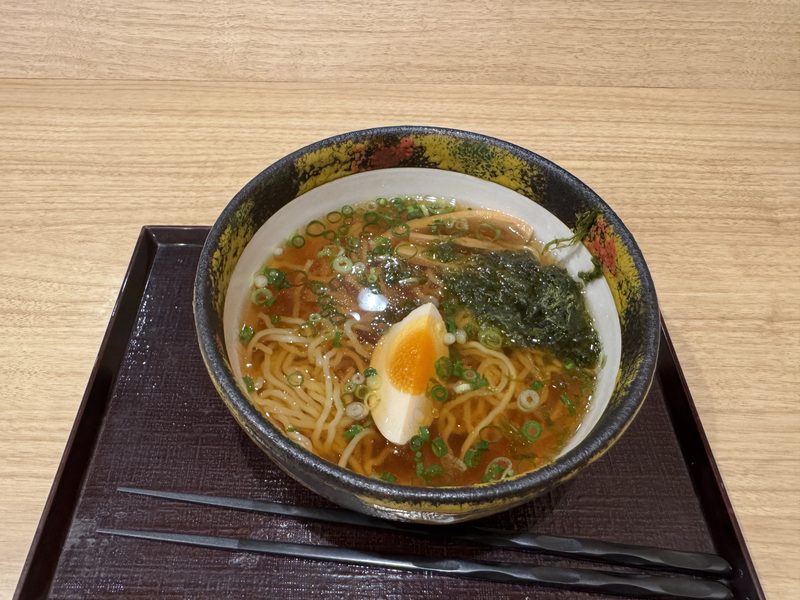
Yonaki soba (free late-night ramen, a Dormy Inn signature): Eaten just before 22:00, uncrowded, reliably consistent as always.
The Epic Breakfast Buffet
The breakfast venue wasn’t particularly crowded, allowing for a relaxed meal. Item count was standard, but local specialties were plentiful.
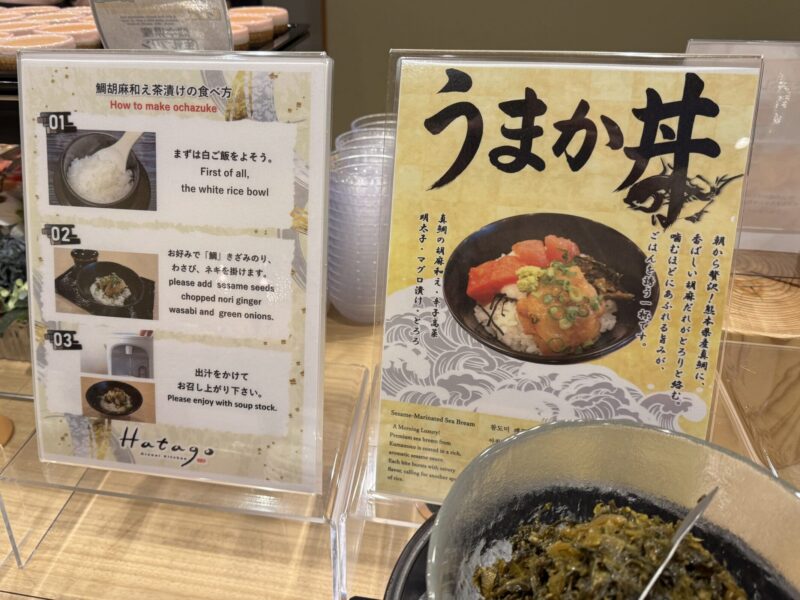
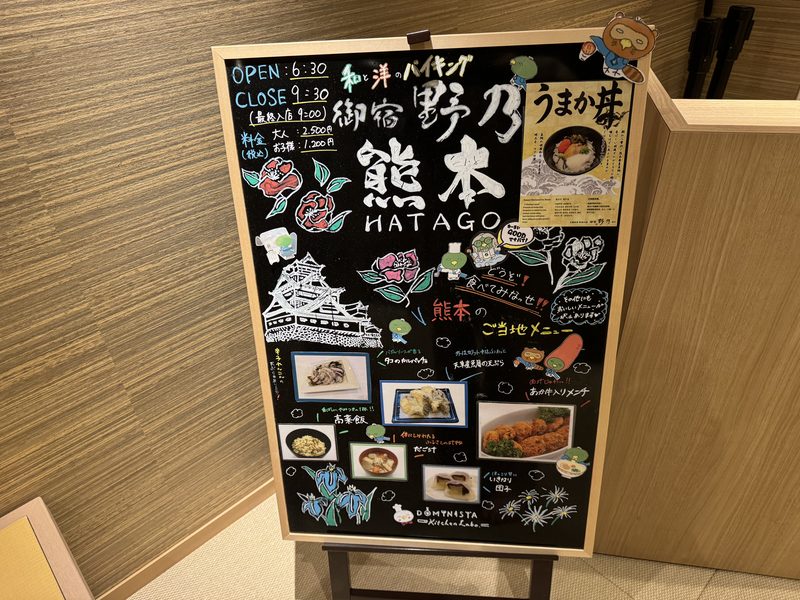
Local “signature dishes”:Umaka-don (make-your-own local seafood bowl).
Seafood lineup:Sea bream with sesame dressing, marinated tuna, mentaiko (spicy cod roe), spicy takana (mustard greens).
Local side dishes:Aka-gyu (Kumamoto red beef) minced-meat cutlet, Amakusa sea bream tempura, spicy renkon (lotus root) tempura, takana rice, dago-jiru (Kumamoto-style dumpling soup), red eggplant tataki, and more.
Desserts & misc:Ikinari-dango (steamed sweet potato and red bean dumpling), mango cake, and more.
Multilingual support: English, Chinese, and Korean.
This round’s seafood bowl skipped the usual ikura (salmon roe) and had a narrower selection overall, but was built around a distinctive centerpiece — sea bream with sesame dressing. The sea bream can also be topped with dashi broth and turned into ochazuke, which was genuinely delicious. Both the Kumamoto red eggplant tataki and the Amakusa octopus carpaccio were excellent, and while tempura is a near-standard fixture at nearly every property, this one had a lovely light crispness. The takana rice paired with mentaiko was a perfect combination. With dago-jiru, aka-gyu mince cutlet, and spicy renkon tempura rounding things out, the Kumamoto-flavored lineup felt genuinely substantial, and overall, this breakfast ranks among the most satisfying of the entire Nono pilgrimage so far.
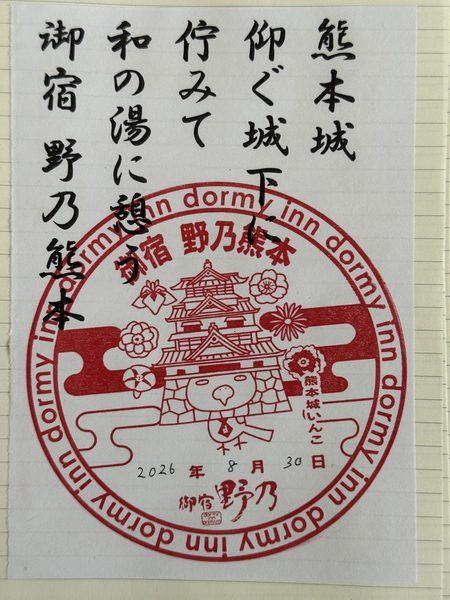
Onyado-in Stamp Collection
[Bonus] Kumamoto Izakaya Report
Two spots this round, going all in on meat and local craft beer.
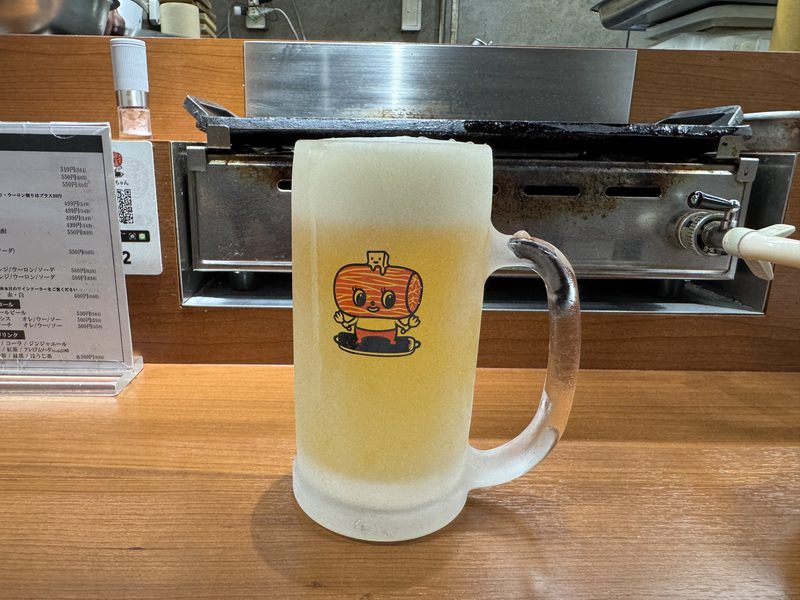
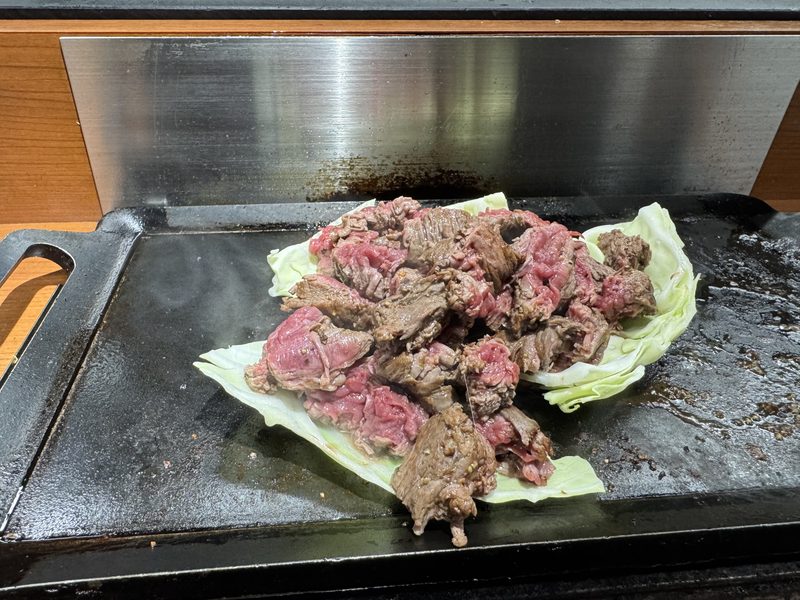
Hire-niku Jun-chan: About 5 minutes from the hotel. A restaurant that cooks a whole block of beef fillet right in front of you, orders starting at 300g. The staff handle everything — no grilling required on your end. The block is seared on the surface, roughly cut, then further pulled apart by fork — rare inside, tender, and packed with umami. Served with margarine soy sauce, garlic sauce, and rock salt. It was so good I finished the 300g before I knew it. Fillet 300g/¥4,290, premium fillet 300g/¥5,610. I chickened out and ordered the regular fillet — I’m now curious just how much better the premium version is. The negi-shio (salted green onion) tongue I ordered as an extra wasn’t quite as memorable, so going all-in on the fillet might be the smarter play. Three drinks plus a thick raw “paripi” beer brought the total to ¥8,246. The appetizer was unlimited sliced onion. Apparently a wildly popular spot, so reservations are recommended. Cards accepted.
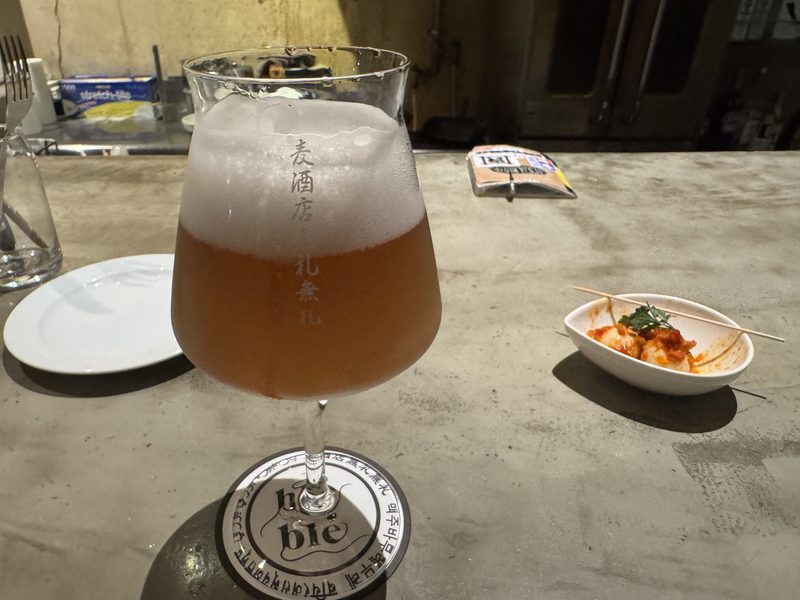
Beer Bar blé blé: Too full from the fillet to bar-hop immediately, so I rested at the hotel first, then headed here — about 2 minutes on foot — for a light beer before the yonaki soba. A stylish interior serving Kumamoto craft beer. Had a pale ale and a saison, paired with quail eggs in harissa marinade. Everything was delicious, though I leaned toward the saison overall. Great atmosphere, friendly staff. Smoking allowed. Payment is likely cash only, so plan accordingly. Bill: ¥2,480.
Two spots, ¥10,726 total. A satisfying close-out beer after a fillet-induced food coma — a well-rounded evening.
Overall Review
Worth mentioning in this Kumamoto stay: the recent earthquake. The slightly tilted sauna stove in the bath house may well be a trace of it. That said, Kumamoto city itself appears to have suffered essentially no damage, which was a relief to learn. Tourism-support initiatives are likely coming, so I’d genuinely encourage as many people as possible to visit Kumamoto — and Onyado Nono Kumamoto — going forward. As a side note, I also stayed at Dormy Inn Kumamoto (the sister brand) back in April, but honestly, Nono still comes out ahead. The freedom of not having to wear shoes indoors remains a genuine draw (though I can’t speak to how international guests feel about it).
[Series 14-Property Overview] The Nono Pilgrimage So Far
#
Property
Sauna
Cold bath
Outdoor rest
Rate
1
Sakaiminato
94°C
16°C
Yes (3 chairs)
¥16,000*
2
Toyama
98°C
14°C
Semi-outdoor
¥14,000
3
Namba
94°C
13°C
No
¥22,500
4
Nara
91°C
17°C
Yes (3 chairs)
¥10,350
5
Asakusa (Main)
98°C
16°C (jar)
Quasi-outdoor
¥15,750
6
Kyoto Shichijo
100°C (Herbal Clear debut)
19°C
Open-air-style (indoor)
¥17,280
7
Kanazawa
95°C, largest yet (20+)
16°C (spacious)
True / top floor
¥11,700
8
Osaka Yodoyabashi
95°C
14°C (compact)
Quasi-outdoor
¥13,850
9
Sendai
96°C, smallest (6)
15°C (single-person)
Yes (open sky)
¥13,950
10
Matsue
92°C, self-löyly debut
15–16°C (waterfall & rain)
Matsue Castle view
¥12,600
11
Matsumoto
92°C, self-löyly, wide (14)
17°C (deep)
Azumino mountains
¥13,950
12
Beppu
91°C, L-shaped (20+)
Largest yet (90 cm deep)
Adirondack + wind chimes + Beppu Tower
¥13,950*
13
Asakusa Bettei
91°C, self-löyly
17°C (slightly deep)
Semi-outdoor + Totonoi-Booster Lever
¥19,030†
14
Kumamoto (this stay)
85°C, back to auto-löyly
15°C (walk-through)
Semi-outdoor + Totonoi-Booster Pillow (new!)
¥11,700
*Sakaiminato and Beppu include a dinner plan in the rate. †Asakusa Bettei is after a ¥500 discount coupon. Not a pure room-only comparison — take that into account when evaluating value. “Onyado Nono Kumamoto” in one line: A newly opened property with a surprise return to auto-löyly, and a distinctive breakfast built around sea bream with sesame dressing — excellent value at Higo-no-Yu. The biggest draw is the 85°C auto-löyly + auto-airflow combination, expertly balanced. The lighting effect tied to the 20-minute auto-löyly cycle, combined with a deliberate step back from the recent self-löyly trend, made for a genuinely refreshing take. Plenty of other thoughtful touches too: the walk-through cold bath, the new “totonoi-booster pillow” gadget, and what may be the series’ first “hand-massage room.” Breakfast centers on a seafood bowl built around sea bream with sesame dressing, alongside aka-gyu mince, spicy renkon, dago-jiru, and takana rice — a Kumamoto-flavored lineup dense enough to rank among the most satisfying breakfasts of the entire pilgrimage. At ¥11,700, the rate sits near the bottom of the series, and combined with the pristine year-old interior and the 5-minute walk from Sakura-machi Bus Terminal, the value proposition here is excellent. The street-food scene delivered too, with Hire-niku Jun-chan’s block-of-fillet steak and Beer Bar blé blé’s Kumamoto craft beer rounding out a genuinely satisfying evening. The tilted sauna stove hinted at the recent earthquake, but it’s reassuring to know Kumamoto city itself has seen essentially no damage. With tourism-support measures likely on the way, I’d love to see more people visit Kumamoto — and this Nono in particular.
I highly recommend booking in advance. Check the latest prices and availability for Onyado Nono Kumamoto on Hotels.com below!


コメント