[Onyado Nono Asakusa] Tokyo’s only kuroyu (black hot spring), 98°C sauna, and the yonaki soba comeback — full review
東京都-Tokyo
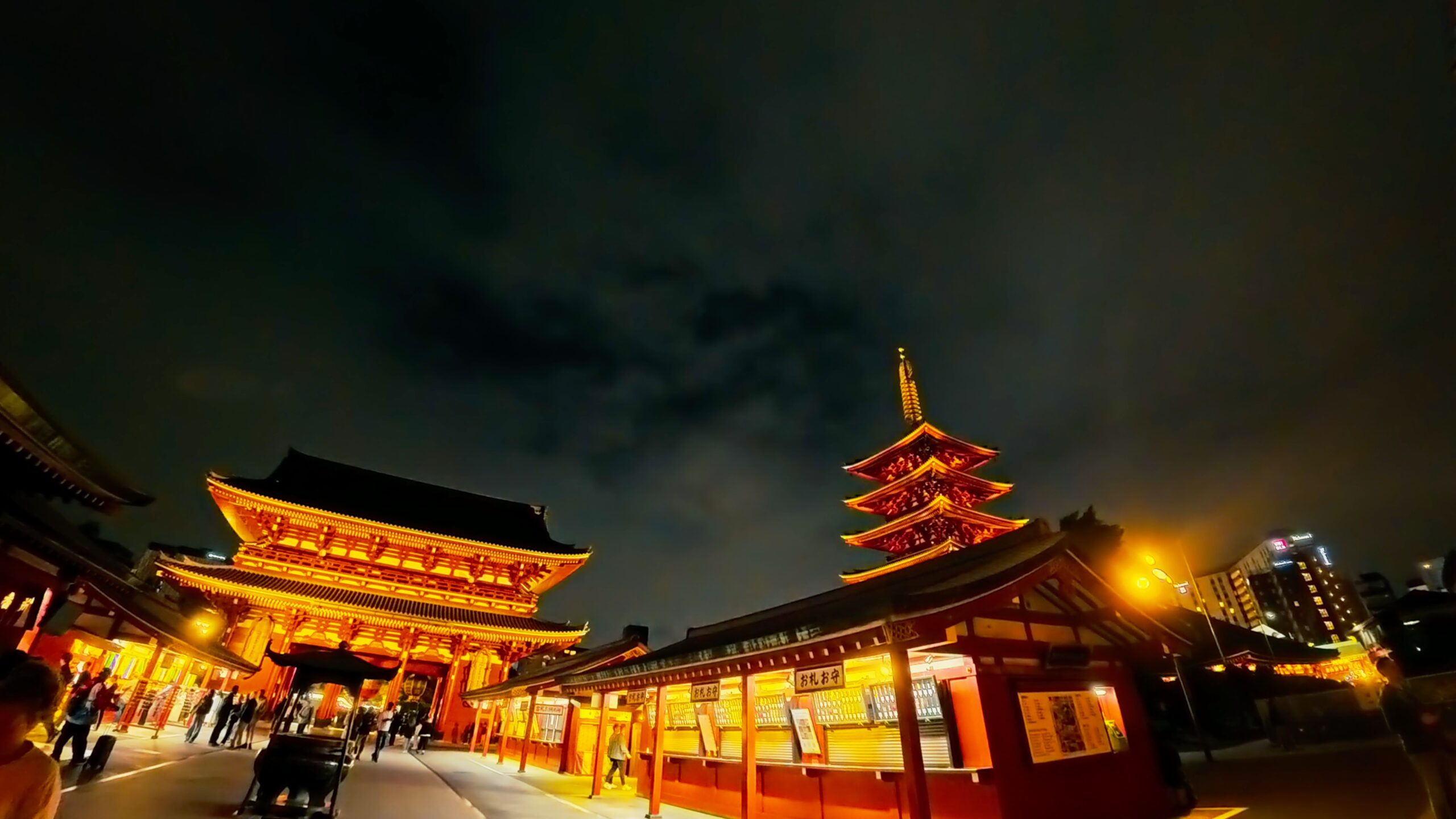
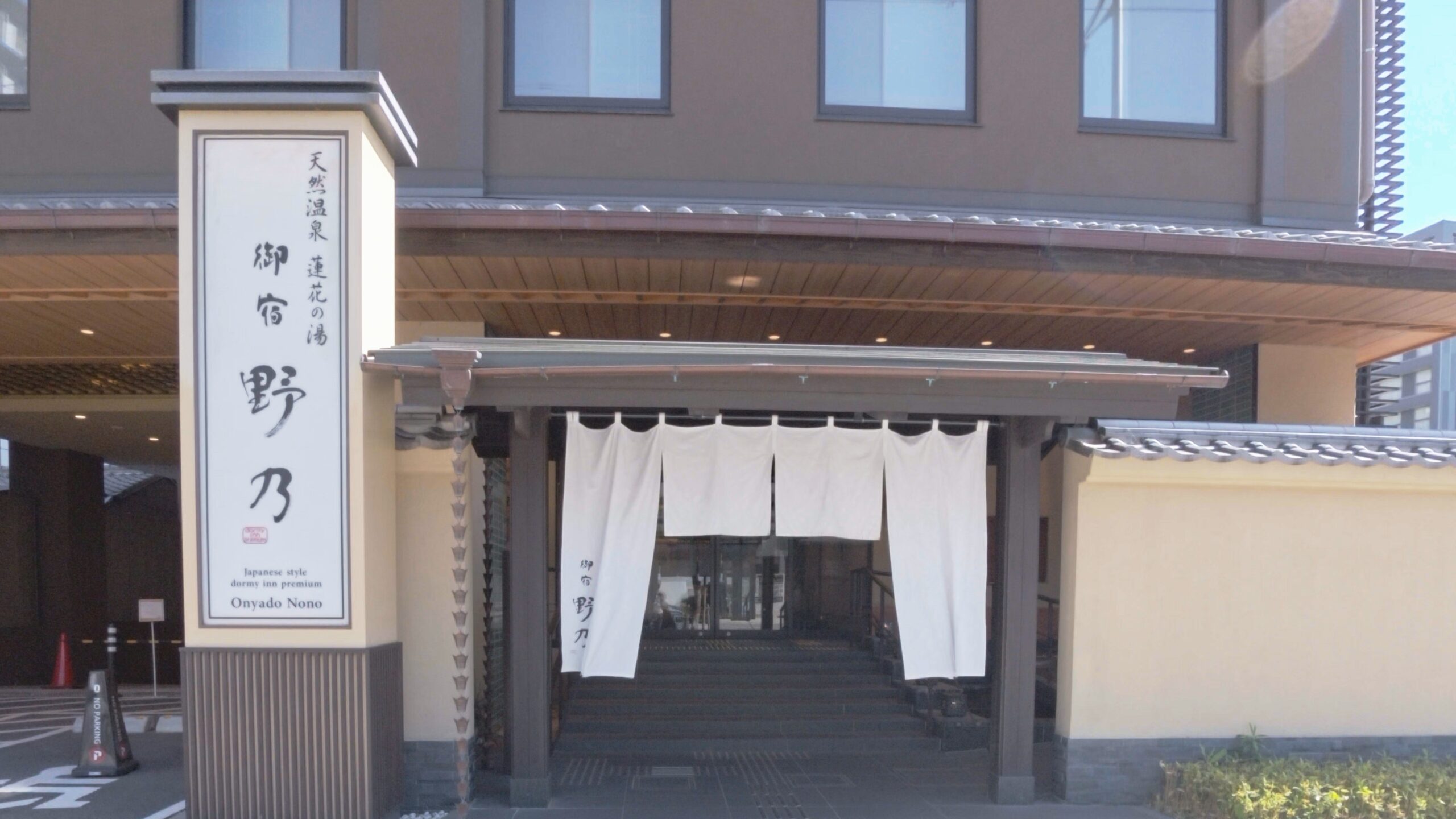
Hi everyone, Greippi here. This is the 5th installment in my mission to conquer every “Onyado Nono” property — the Japanese-style premium brand from Dormy Inn. Today’s destination: “Natural Hot Spring Ryoun-no-yu Onyado Nono Asakusa,” right in the heart of Tokyo’s most iconic sightseeing district. After Sakaiminato, Toyama, Namba, and Nara, I’ve finally arrived in the capital. Last time in Nara, I earned the shameful title of “Dormy-ist failure” by missing yonaki soba (the free late-night ramen) two nights in a row. This time, I came to Asakusa on the final day of Golden Week with one mission: break the curse. With the inbound tourism boom in full swing and Asakusa absolutely packed, would Onyado Nono Asakusa hold its own? I stayed there — here’s the honest report.
Property: Natural Hot Spring Ryoun-no-yu Onyado Nono Asakusa
Stay date: May 6–7, 2026 (final day of Golden Week)
Access: 12-minute walk from Asakusa Station (subway).
Rate: ¥15,750 (single occupancy / 1 night)
Surroundings: Hoppy Street and other izakaya streets nearby. Supermarkets and convenience stores within arm’s reach.
A note on access: while previous Onyado Nono properties were all within 1–5 minutes of a station, Asakusa is a 12-minute walk — surprisingly far by series standards. That stings if you’re carrying heavy luggage or it’s raining. That said, Senso-ji Temple, Kaminarimon, and Tokyo Skytree are all within walking distance, making this the ultimate Tokyo sightseeing base. If sightseeing is your priority, the walk is fine. If sauna is your priority, brace yourself. The rate of about ¥15,750 is pricier than Nara (¥10,350), but for central Tokyo on the last day of Golden Week, it’s actually quite reasonable.
Check out my YouTube video here!
Room & Japanese-Style Experience
The full-tatami signature of the Onyado Nono series is intact in Asakusa too.
Tatami first impression: Some wear and tear is visible inside the room. The hallway is partly wood-floor instead of full tatami — a series outlier.
Room type: Single room. On the small side.
Bed comfort: Reliable Serta-made mattress, the series-wide standard.
Samue (traditional Japanese-style loungewear): The usual. Auto-switch to relaxation mode the moment you put it on.
Welcome service: Moist banana cake. A new pattern — different vector from Nara’s strawberry jelly, but equally delightful.
As a prime central Tokyo location, the room is the smallest in the series so far. Tatami shows minor wear, and there are fewer floral decorations than usual. Given the location and the relentlessly high occupancy rate, that’s understandable. As “a base for sightseeing,” it’s perfectly fine. The room is also a bit on the dim side overall — great for sleep, less great for photos.
Bath & Sauna (Ryoun-no-yu Natural Hot Spring)
The sauna specs this time:
Bath name: Ryoun-no-yu Natural Hot Spring
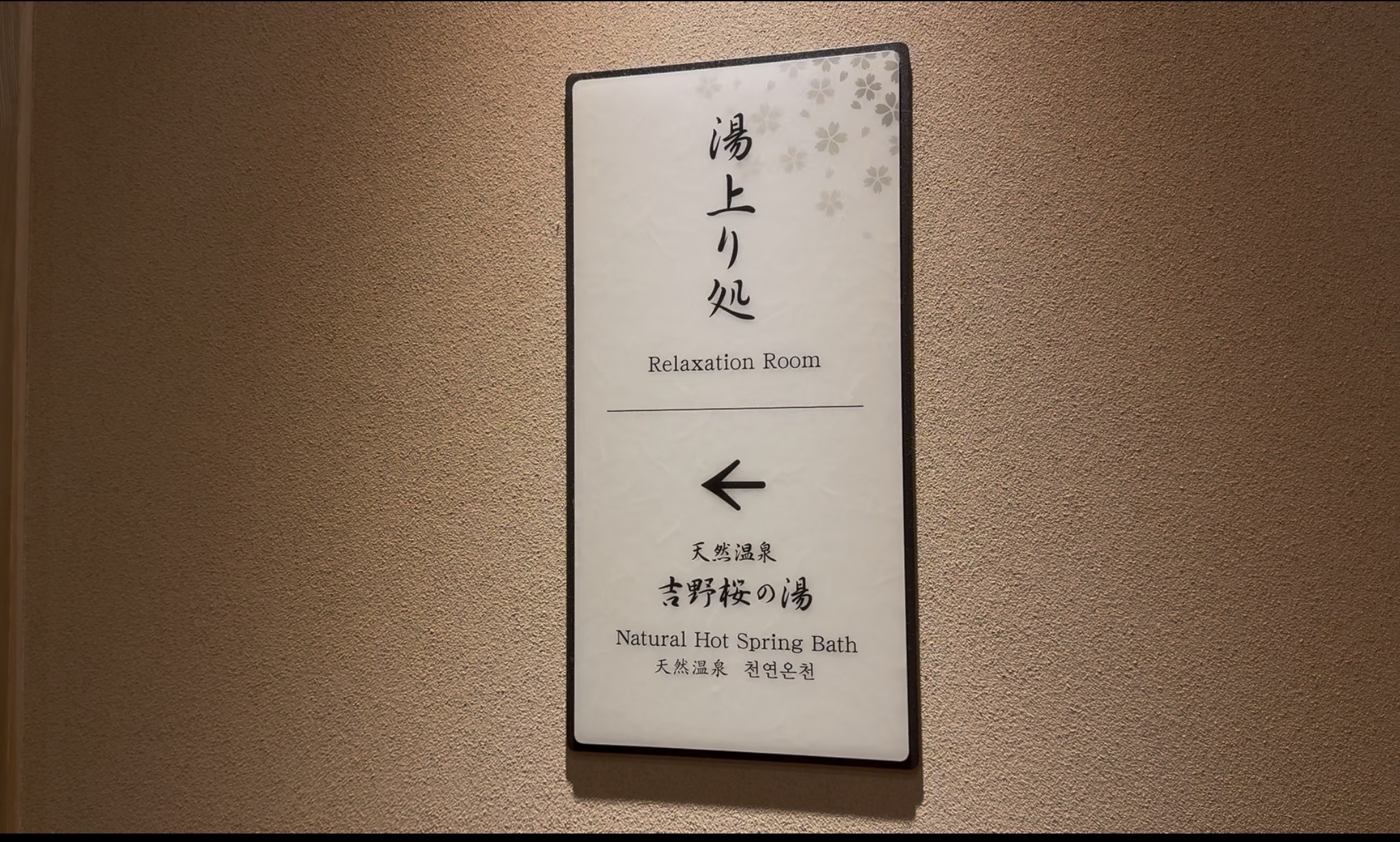
Water:Indoor bath is kuroyu (black hot spring water), a Tokyo-shitamachi specialty. The semi-outdoor tsubo-yu (jar bath) is clear.
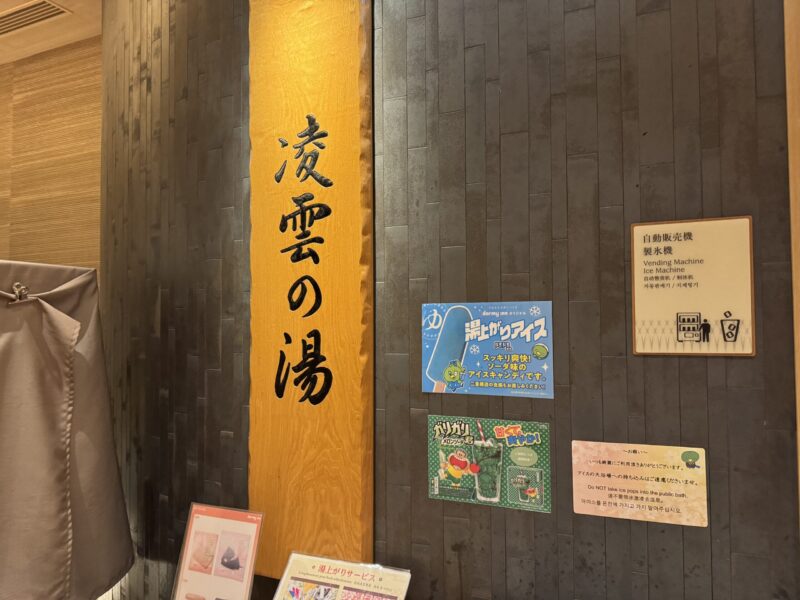
Sauna temp: 98°C (208°F). Tied with Toyama as the hottest in the series. Classic dry, crisp Dormy style. Aroma: the signature Energy Bouquet.
Cold bath: 16°C (61°F). Single-person tsubo (jar) style with overflow. Just right.
Rest space: 1 indoor chair / 3 outdoor chairs. The bath is in the basement, but the ceiling is partly open, giving an outdoor-bath feel.
BGM: The usual Tokusashi-san. Reliable healing-tone music.
TV: Detective drama at night, NHK news in the morning.
Tattoo policy: Generally not allowed. Heads-up for tattooed guests.
The headline feature is undoubtedly the kuroyu — black-tinted, mineral-rich hot spring water unique to Tokyo’s old downtown. This is something neither Nara (clear) nor Namba (artificial onsen) could offer. Even the towels are brown instead of the usual white — almost certainly because kuroyu would stain white towels. The 98°C sauna ties with Toyama for the series record. That “properly baked dry” feeling is far stronger than Nara (91°C) — true Dormy quality on full display. The 16°C cold bath is similar to Nara’s 17°C — comfortably brisk, in a single-person tsubo-style overflow design. The popular tsubo cold bath from Sakaiminato has been adopted here too. And here’s the design highlight: even though the bath is in the basement, part of the ceiling is open to the sky, giving you a quasi-outdoor-bath experience with 3 chairs. It’s not full outdoor air, but it completely avoids the closed-in feeling of Namba. For a basement bath, this is impressive design.
Free Services (Omotenashi)
The Dormy Inn group’s signature free service report.
Post-bath ice cream (evening): Garigari-kun melon soda — the first Garigari-kun (a famous cheap Japanese popsicle) sighting in the series.
Post-bath probiotic drink (morning): Pilkul is back. After Nara’s mysterious off-brand version, the original returns.
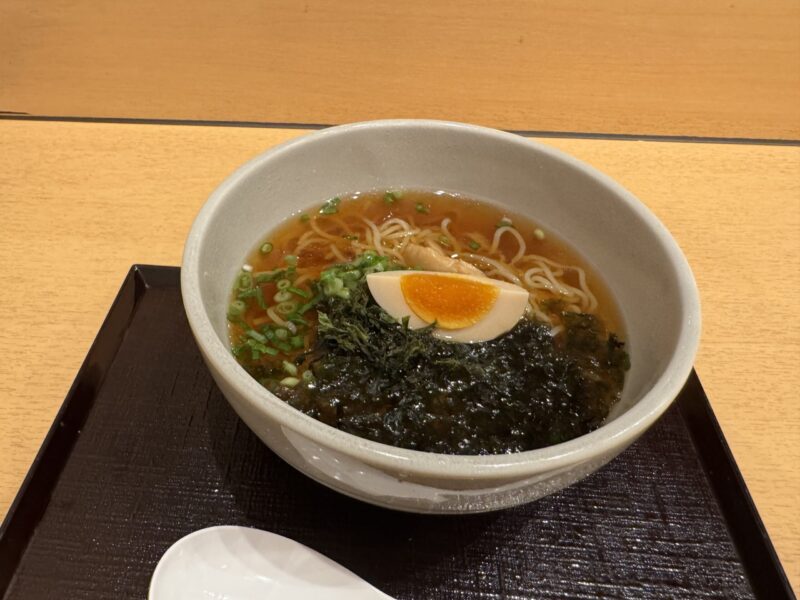
Yonaki soba (free late-night ramen, a Dormy Inn signature):Eaten at 21:45. Finally.
Major announcement: the two-night yonaki soba curse has been broken in Asakusa. At 21:45, I went down to the lounge to find a moderate queue at the yonaki soba counter. Making up for two missed nights at Namba and Nara, I devoured a bowl of light shoyu-based broth and thin noodles. “Tastes even better because you’ve missed it before” — that’s my conclusion (lol). The Garigari-kun melon soda was a series first. Skipping the Häagen-Dazs tier for a humble dagashi (cheap Japanese candy) popsicle feels very on-brand for Asakusa’s shitamachi (old-town) sensibility. And the return of Pilkul for breakfast is a small but welcome touch.
The Epic Breakfast Buffet
Breakfast on the last day of Golden Week was a battlefield. Still, for the sake of the record, I powered through.
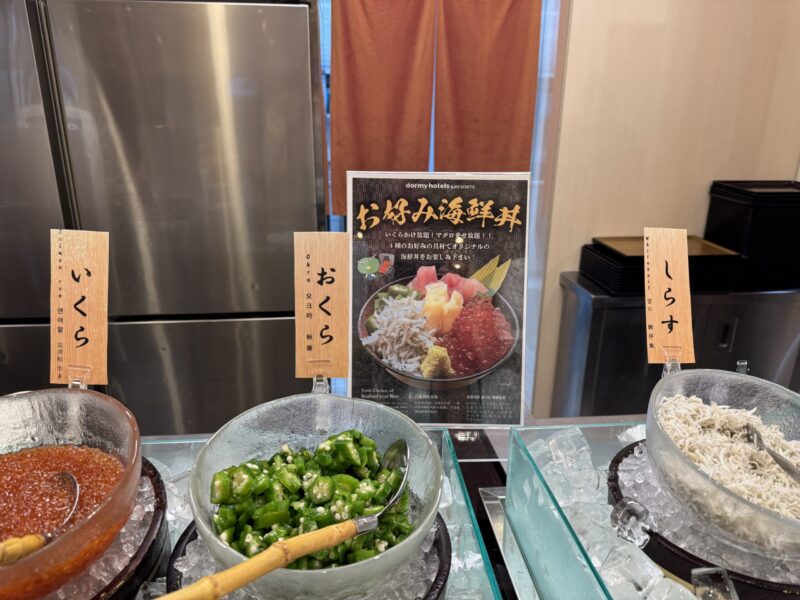
Local “signature dish”: “Make-your-own seafood bowl” (Okonomi kaisen-don).
Local side dishes: “Gyu-nabe” (Meiji-era beef hot pot), “asari miso soup” (clam miso soup).
Desserts & misc: A few options. Noticeably fewer than other locations.
Multilingual support: Three-language menu (English, Chinese, Korean).
The local signature dish is “make-your-own seafood bowl.” …Honestly, compared to Namba (kushikatsu) and Nara (kakinoha-zushi / chagayu / Miwa somen), the “local-ness” feels markedly diluted. Seafood bowls are everywhere. That said, for the record: the ikura tasted better than at Namba, in my opinion. Where I did feel real local flavor was the “gyu-nabe” — a beef hot pot dish evoking Tokyo’s Meiji-era civilization-and-enlightenment culture. You don’t see this elsewhere in the series. Eating beef hot pot at breakfast is a quietly luxurious experience, and it captures Asakusa’s role as a Tokyo sightseeing base nicely. The asari miso soup, too, nods to Tokyo Bay’s clam culture. Overall this may be the smallest spread in the series so far. Compared to Sakaiminato (overwhelming seafood), Toyama (white shrimp, firefly squid), and Nara (the four ancient-capital specialties), the variety is more modest. But again — central Tokyo, sky-high occupancy. Fair enough.
[Bonus] Asakusa Izakaya-Hopping Report
Hoppy Street and surroundings are wall-to-wall izakaya. But I’m not really a fan of tourist-fied bar streets, so I escaped the crowds and headed toward Nishi-Asakusa. The result: three out of three winners.
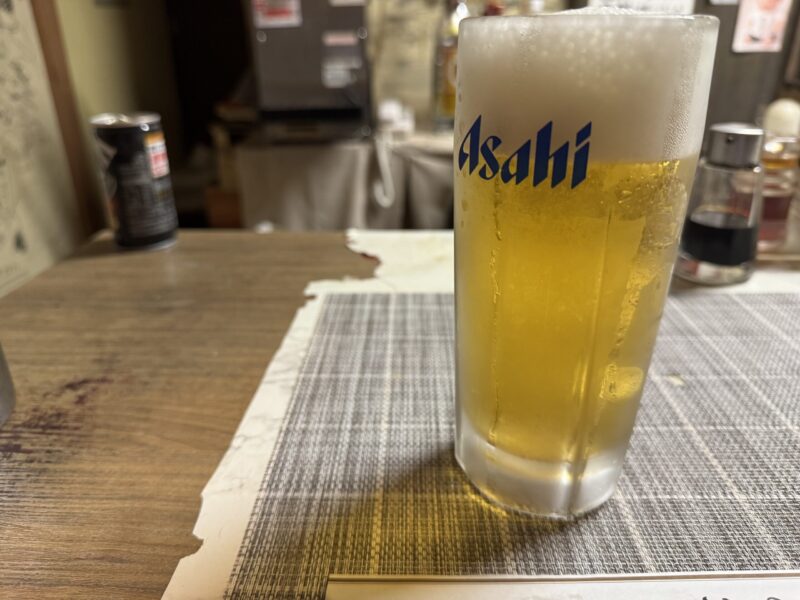
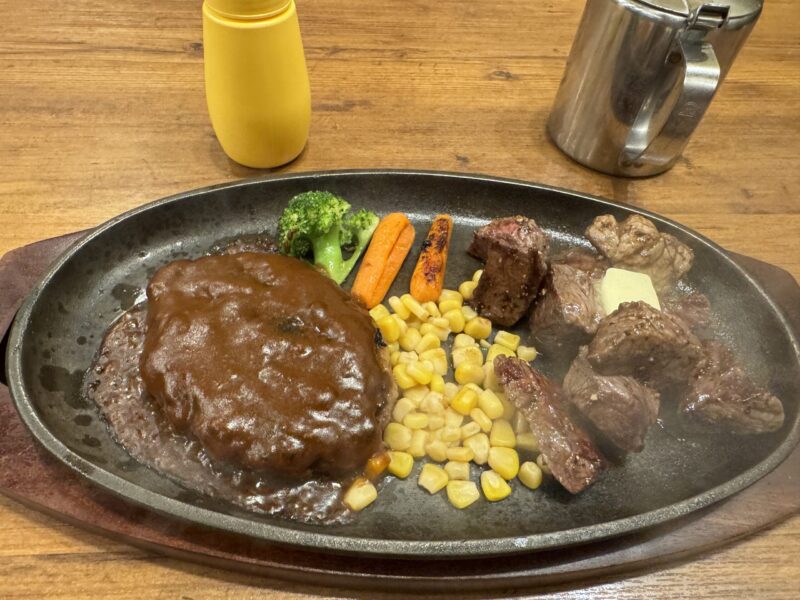
Wazn: Hamburg steak & steak combo (150g each) with a highball. The steak was tender and juicy. The hamburg’s sauce was great, though the juiciness was modest. Still, very enjoyable. Bill: ¥3,240. The right call after fleeing the tourist crowds.
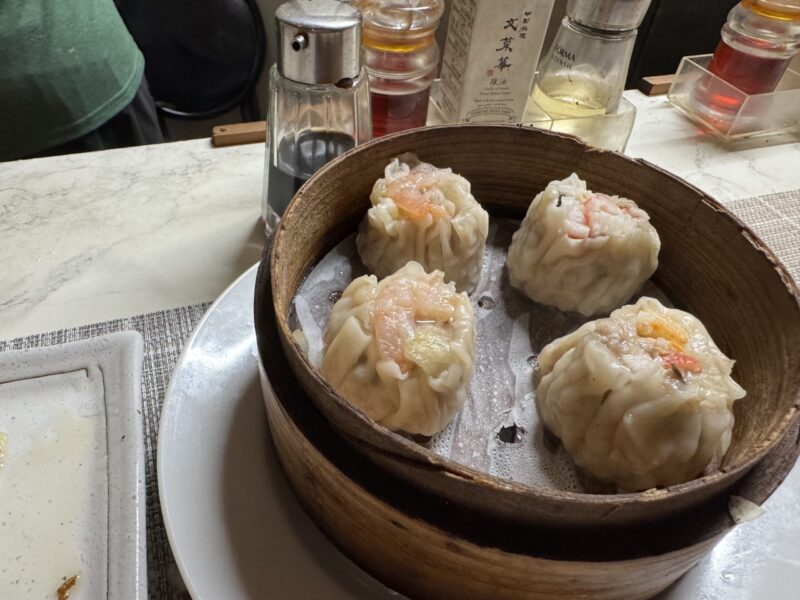
Tenshin Ranman: Walked past, got curious, walked in. A tiny place run by a gruff but kind old guy. Ordered yaki-gyoza and xiao long bao — but the owner said “shumai is better” (apparently the last customer had ordered the same thing), so I switched to shumai. They have shrimp and crab versions, normally 3 each, but he served “2 each plus 1 bonus.” The yaki-gyoza might be the best I’ve ever had. The shumai was killer too. With a draft beer: ¥1,500. Excellent.
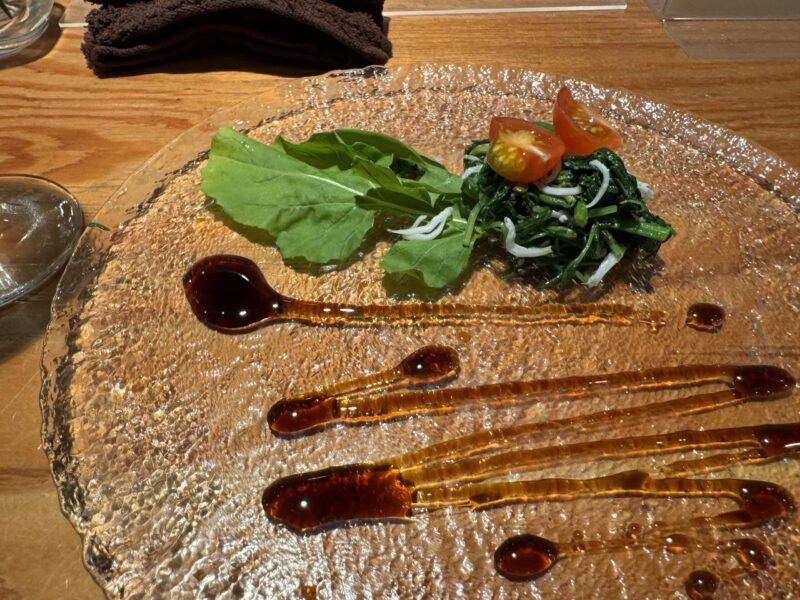
Dochaku: Stylish Italian standing bar. Glass of red, glass of white, “arugula and shirasu ceviche,” and “beef tendon braised in red wine” — ¥3,740. Surprisingly reasonable. 1F is standing, 2F is a regular restaurant. Happy hour reportedly offers wine for ¥500 — next time, I’m aiming for that window.
Three-bar total: ~¥8,480. Strong value for Asakusa-central, especially with three winners. The right Asakusa move isn’t “drink with tourists on Hoppy Street” — it’s “head slightly off-center to Nishi-Asakusa for serious bars.”
Overall Review
Item
Asakusa
Nara (ref)
Namba (ref)
Toyama (ref)
Sakaiminato (ref)
Sauna temp
98°C / 208°F
91°C / 196°F
94°C / 201°F
98°C / 208°F
94°C / 201°F
Cold bath
16°C (jar / overflow)
17°C (overflow)
13°C
14°C
16°C
Outdoor rest
Quasi-outdoor (basement w/ open ceiling)
Yes (3 chairs)
No
Semi-outdoor
Yes (3 chairs)
Hot spring type
Kuroyu (black)
Clear
Artificial onsen
Clear
Clear
Local signature
Seafood bowl, gyu-nabe
Kakinoha-zushi, chagayu, Miwa somen
Kushikatsu
White shrimp / firefly squid bowl
Seafood bowl
Rate (approx.)
~¥15,750
¥10,350
¥22,500
¥14,000
¥16,000*
*Sakaiminato’s rate includes the dinner buffet plan, not a room-only rate — keep that in mind when comparing value. “Onyado Nono Asakusa” in one line: a Tokyo sightseeing powerhouse with the only kuroyu (black hot spring) experience in the series. The sauna specs — 98°C dry heat and a 16°C tsubo-style cold bath — show full Dormy quality. The series’ only kuroyu, plus a clever basement-with-open-ceiling design that delivers outdoor-bath feeling: this place has plenty for sauna lovers to celebrate. The cramped rooms and minor tatami wear are downsides, but excusable given the location and occupancy. Breakfast is the most modest spread in the series, and the “local” feel is weaker than Nara’s. That said, the gyu-nabe — a Tokyo Meiji-era specialty — and the ikura (better than Namba’s, by my taste) are worth noting. The location is unbeatable as a Tokyo sightseeing base: Senso-ji, Kaminarimon, and Tokyo Skytree all within walking range, letting you combine sightseeing with bathhouse culture. The 12-minute walk from the station is the longest in the series, though — bring sturdy luggage or budget for a taxi. And most importantly: the two-night yonaki soba curse from Namba and Nara has finally been broken in Asakusa. That 21:45 bowl of shoyu broth will live rent-free in my head forever.
I highly recommend booking in advance. Check the latest prices and availability for Onyado Nono Asakusa on Hotels.com below!
コメント